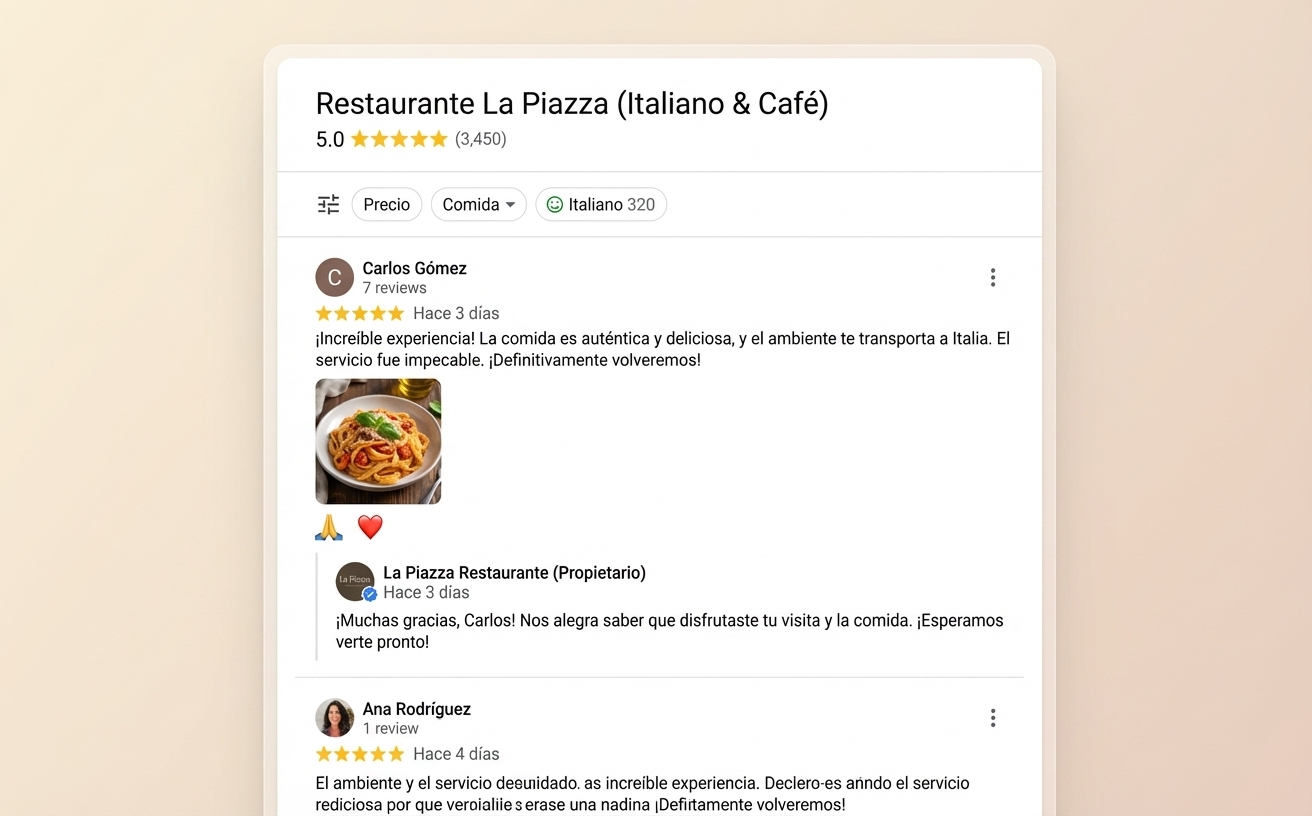
The three main ranking factors in Google Maps
Google explains that map results mainly depend on three factors:
- relevance
- proximity
- prominence

When someone searches for a business on Google, the map results are not random. Google uses a combination of signals to decide which businesses appear first in Google Maps. Understanding these factors is key for any company that wants to improve itsGoogle Maps positioninand turn the map into a real customer acquisition channel. In this guide, we explain the most important factors and how to optimize them
Google explains that map results mainly depend on three factors:
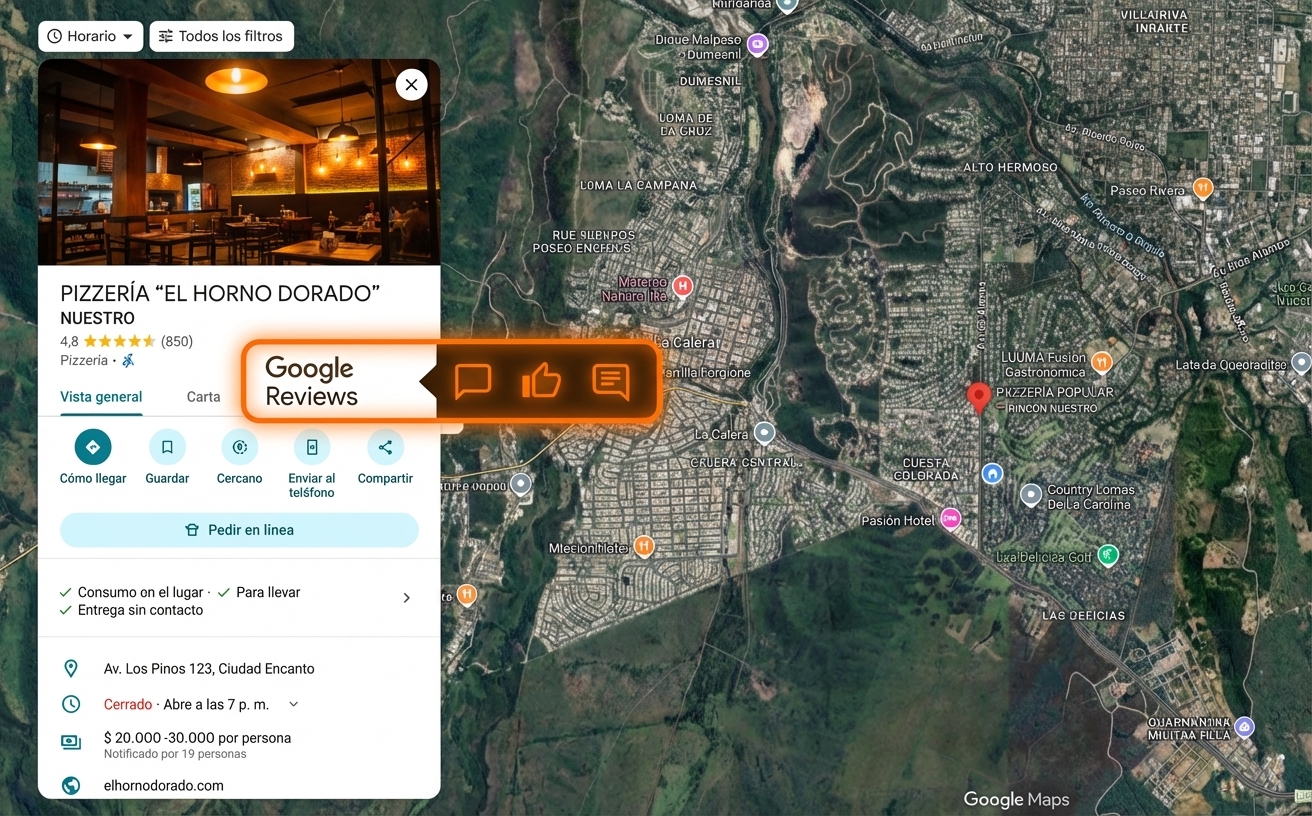
Relevance measures how well a business matches what the user is searching for.
For example:
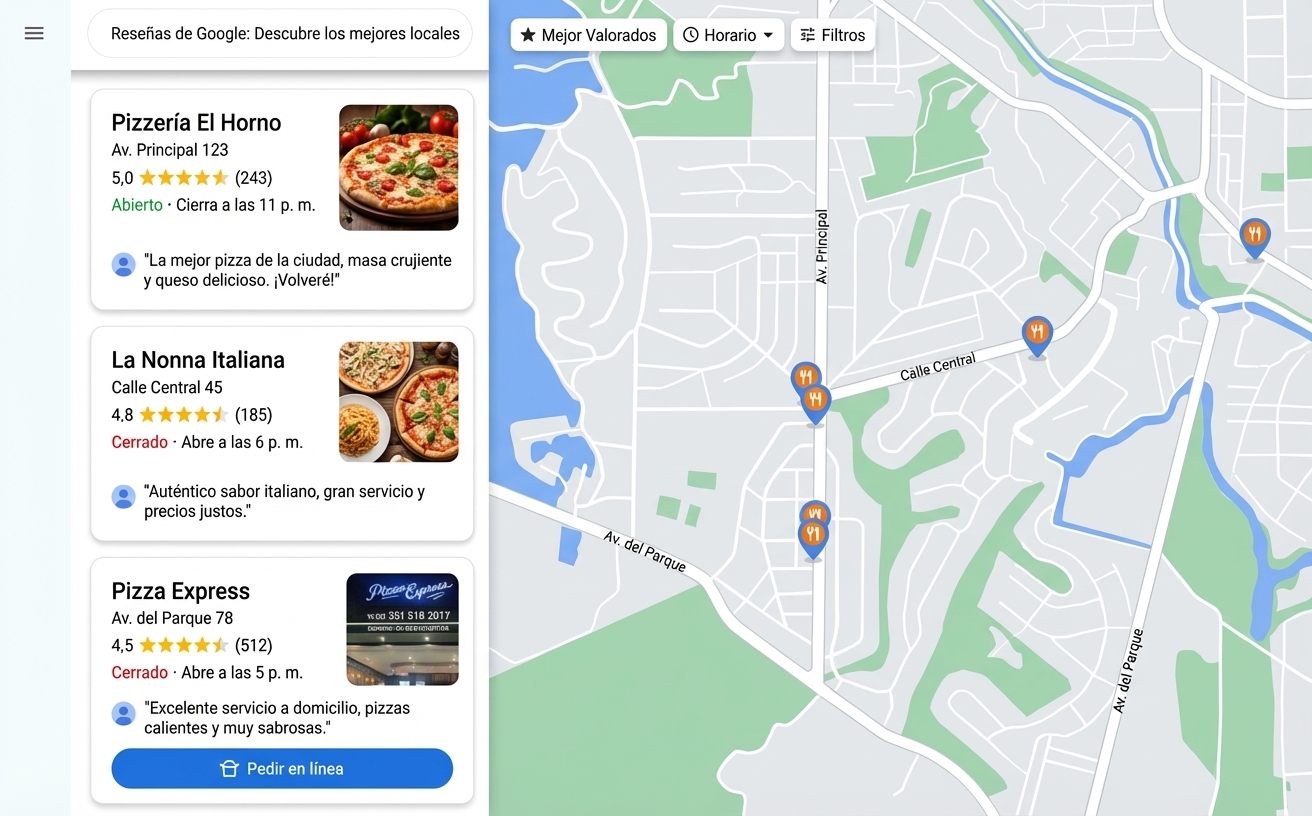
Proximity refers to the distance between the business and the user performing the search.
When someone searches “restaurant,” Google tries to show nearby businesses.
This factor cannot be modified directly, but it can be optimized by improving the other factors that influence ranking.
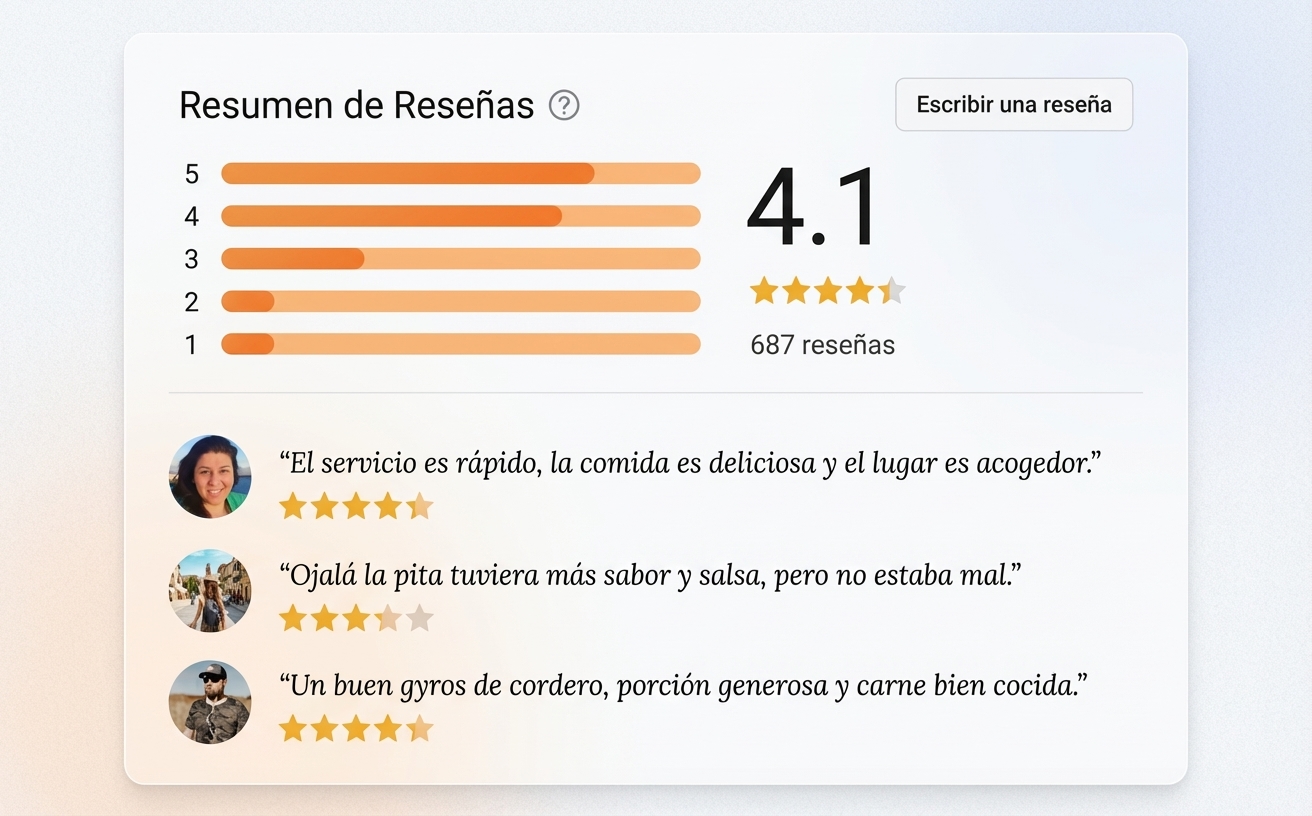
Prominence measures how known or relevant a business is.
Among the signals Google uses to measure prominence are:

Although Google uses many factors, in practice reviews usually have a huge weight.
Reviews influence:

Not only the total number of reviews matters.
The frequency of new reviews also matters.
A business that receives reviews constantly signals activity and relevance.
For example:
Responding to reviews is not only customer support.
It also demonstrates activity on the profile.
Responding to comments:
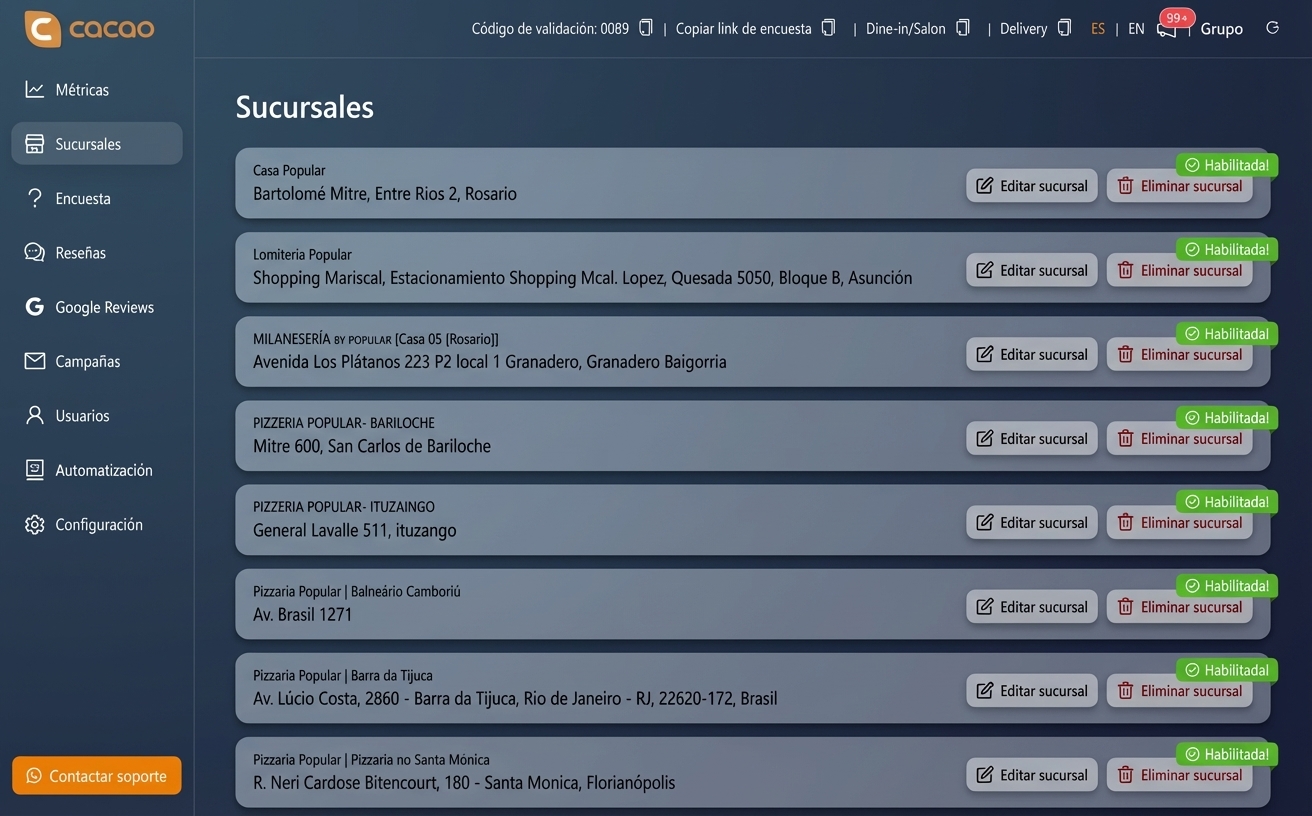
For businesses with many locations, managing reviews manually becomes complex.
Common problems:
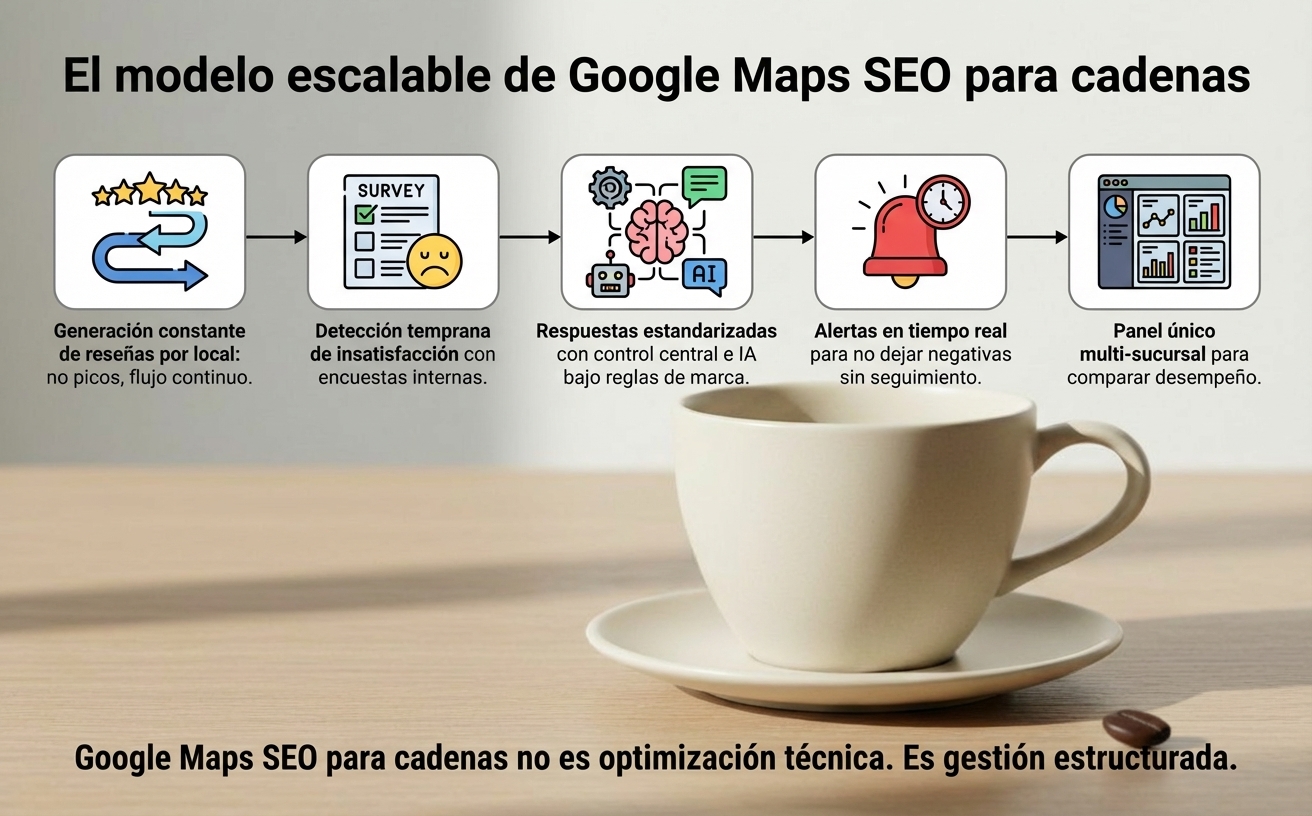
The ultimate goal of optimizing Google Maps is not only improving ranking.
The goal is to turn the map into a constant customer acquisition channel.
To achieve this, companies usually work on three fronts:
Go deeper with these practical guides for local visibility and rankings.

Understand proximity, relevance, and prominence to improve local positioning.

A repeatable framework for review flow, monitoring, and response quality.

Build a consistent review-generation system by location without campaign spikes.
With Cacao you can: generate more reviews respond automatically monitor reputation across all your locations improve your Google Maps positioning 👉 Request demo [Contact](/ {country}/contact) 👉 View pricing [Pricing](/ {country}/pricing)
Request demoThe main factors are relevance, proximity, and prominence. Within prominence, reviews usually have an important impact.
Yes. Reviews influence business perception and profile activity, which can impact map visibility.
Yes. Responding to reviews shows activity and commitment to customers. You can see how in the dedicated guide.