
Location-specific Google reviews for restaurants and franchises

For restaurants and franchises with multiple locations, getting more Google reviews is only part of the work. Each review should go to the location the customer actually visited, so every Google Business Profile can build its own local trust, visibility, and operational feedback.

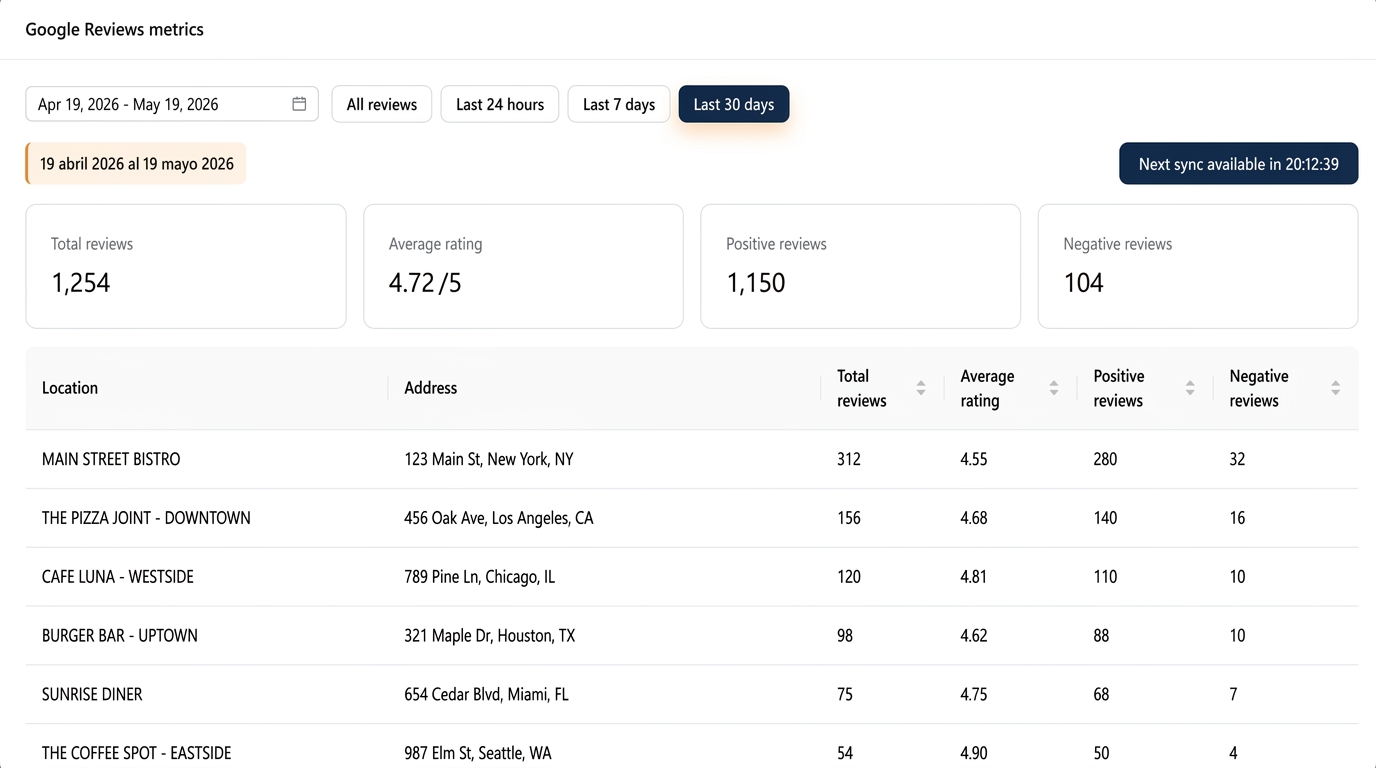
Google reviews dashboard showing review metrics by restaurant location

What are location-specific Google reviews?

Location-specific Google reviews are reviews connected to the exact restaurant, store, or franchise location where the customer had the experience.

Instead of sending every customer to a corporate profile or the best-known location, each branch has its own review flow and its own Google Business Profile.

  • The customer reviews the location they actually visited.
  • Each restaurant location grows its own review profile.
  • Operations teams can compare reputation by location.
Do Google reviews help local SEO?

Yes. Google explains that local results are mainly based on relevance, distance, and prominence. Reviews are part of that prominence layer: more reviews and positive ratings can help local ranking. You can go deeper in our guide to Google Maps ranking factors.

That does not mean every review has the same operational value. For multi-location restaurants, the most useful review is the one attached to the correct location, because that is the profile competing in that local market.

Does the reviewer's physical location matter?

Google does not publicly confirm that the GPS location of the reviewer is a direct ranking factor. A safer way to think about it is this: Google wants authentic, relevant local information, and each location needs reviews that reflect real customer experiences.

For restaurants and franchises, the practical priority is not trying to control where the reviewer is standing. The priority is routing the customer to the correct Google Business Profile and making the review process easy.

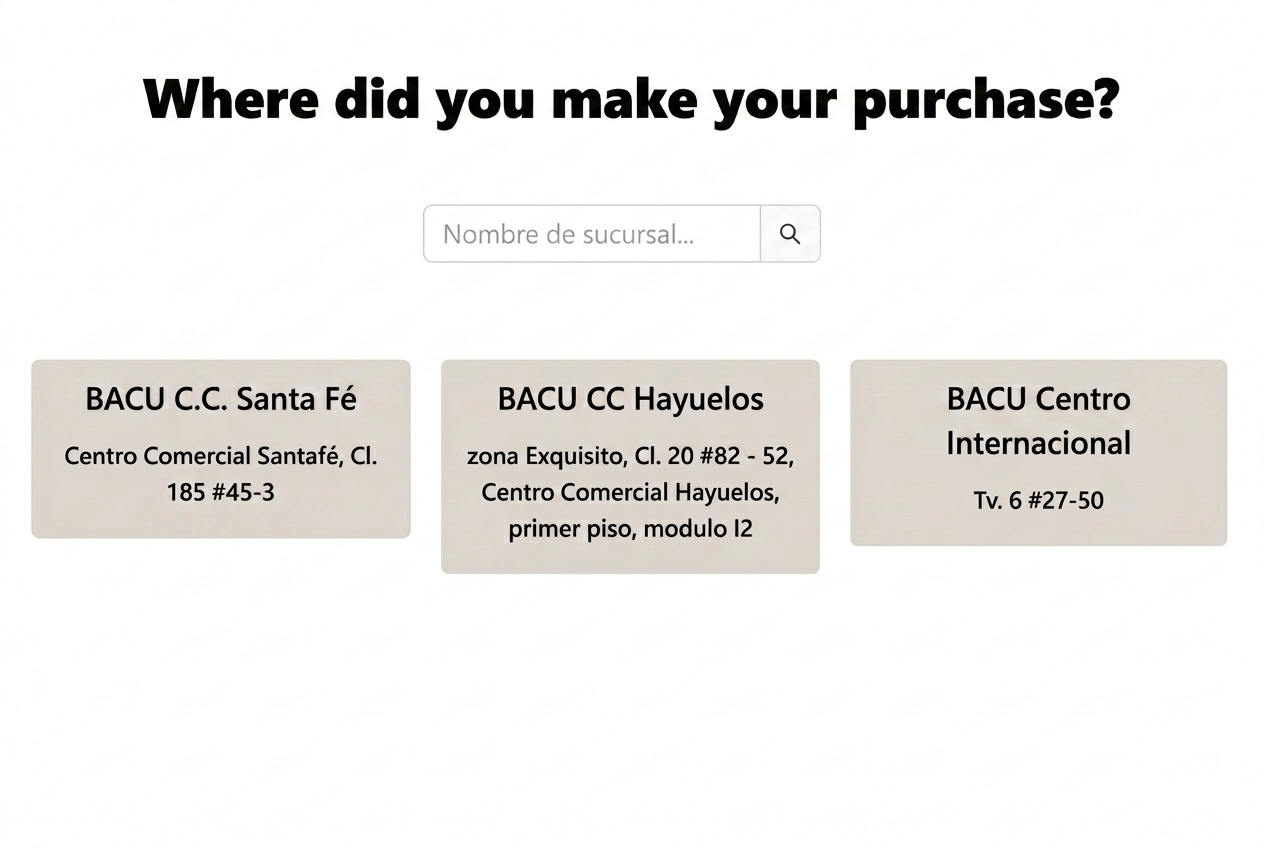
Location selection screen for routing customers to the correct Google review profile

Why each restaurant location should collect its own reviews

When every location collects its own reviews, the brand gets a clearer view of local performance and customers get more trustworthy information before choosing where to go.

  • Local trust: customers can see recent experiences from the exact location they are considering.
  • Cleaner reporting: teams can compare review volume, rating, and sentiment by location.
  • Better accountability: managers can identify which locations need service, staffing, or training support.
  • Stronger local profiles: each branch builds its own prominence instead of relying on one central profile.

Common mistakes multi-location restaurants make

Most problems start when review collection is treated as one generic process instead of a location-level workflow.

  • Using one Google review link for every location.
  • Sending all customers to the main or corporate location.
  • Printing generic QR codes that do not identify the branch.
  • Collecting reviews without connecting them to POS, CRM, or location data.
  • Asking customers to mention unnatural keywords instead of encouraging honest feedback.

How to collect Google reviews by location

The simplest setup is a unique review path for every location. That can include Google review QR codes by location, location-specific links, and automated requests triggered after the customer visit.

For restaurants, the best moment is usually close to the experience: after the meal, after checkout, or after a positive internal survey response.

  • Create a unique Google review link for each Google Business Profile.
  • Use a unique QR code for each restaurant location.
  • Ask a short internal survey before sending satisfied customers to Google.
  • Trigger requests from POS or CRM events tied to the correct location.
  • Monitor reviews in a dashboard segmented by location.

How Cacao helps restaurants and franchises

Cacao helps restaurants and franchises collect, route, and analyze reviews by location. Teams can use automated review collection by location, send each customer to the right Google Business Profile, and track performance from one centralized dashboard.

With a Google reviews analytics dashboard by location, operators can see which locations are improving, which ones need attention, and where review generation is falling behind.

  • QR codes and review links by location.
  • Routing to the correct Google Business Profile.
  • POS and CRM integrations for automated requests.
  • Internal surveys before public review requests.
  • Negative review alerts and AI-assisted replies.

Where this fits in your Google Maps strategy

Location-specific reviews are one piece of a broader Google Maps SEO strategy for chains. They support local visibility, but they also make your operations easier to measure.

If your goal is to improve visibility across many locations, combine this with profile optimization, review response workflows, and a clear plan for how to rank on Google Maps.

Every location needs its own review engine.

For restaurants and franchises, review growth works best when it is local, consistent, and measurable. Cacao gives every location the right review flow while keeping the whole brand under one Google review management tool.

Request demo

Frequently asked questions

Should each restaurant location have its own Google review link?

Yes. Each location should send customers to the Google Business Profile that matches the place they visited. This keeps reviews accurate and helps each profile build its own reputation.

Can one Google review QR code work for multiple locations?

It can, but only if the flow lets the customer choose or detect the right location before sending them to Google. A generic QR that sends everyone to the same profile creates reporting and reputation problems.

Is it bad if a customer reviews the wrong location?

One misplaced review is not a crisis, but repeated misrouting can distort location-level reputation, make reporting less useful, and send customers the wrong signal.

Should customers mention the city or location in their review?

Customers should write naturally. It is fine if they mention the location because it was part of their experience, but brands should not pressure customers to insert keywords.

Does Google use the reviewer's physical location as a ranking factor?

Google does not publicly confirm reviewer GPS location as a direct ranking factor. The stronger recommendation is to collect authentic reviews for the correct business location.

Do Google reviews help local SEO?

Yes. Google says review count and positive ratings can help local ranking as part of prominence. Learn more in our guide to Google Maps ranking factors.