




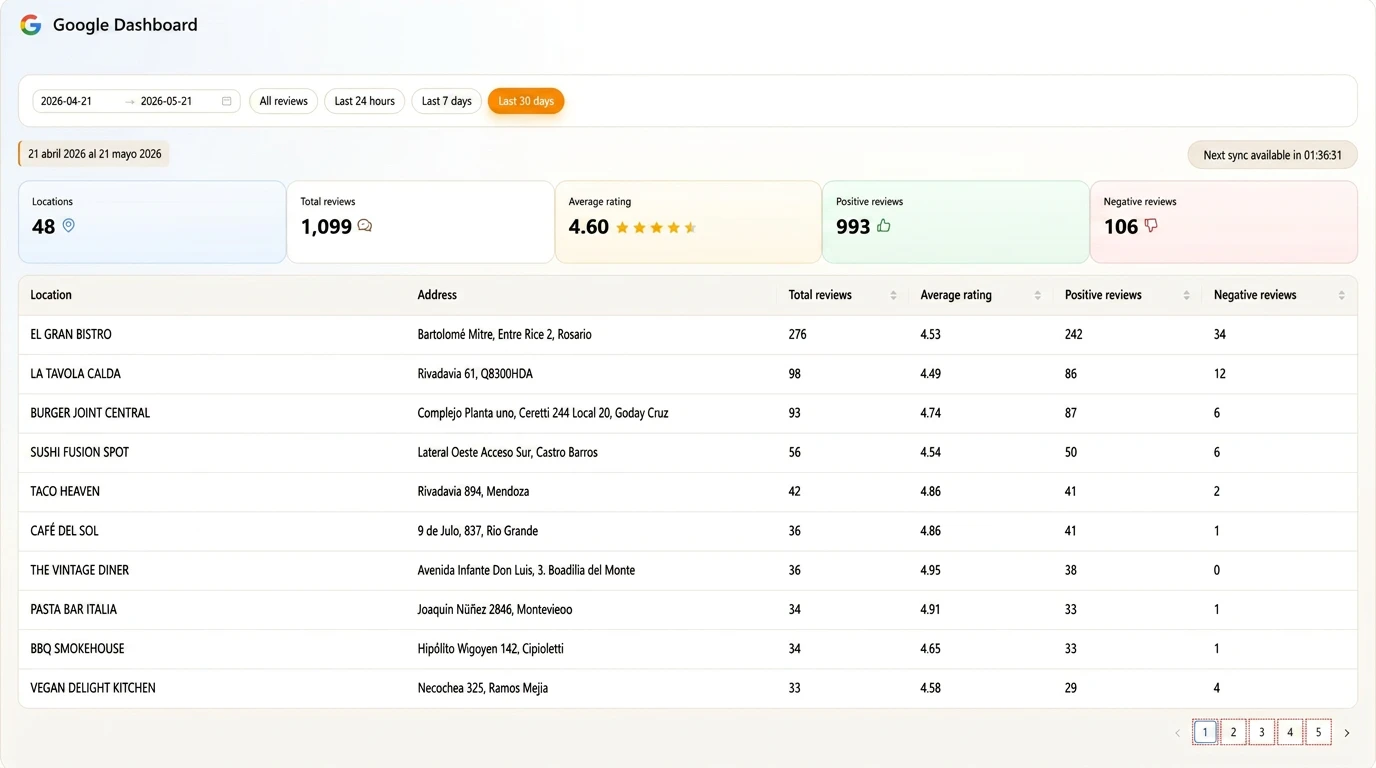
Centralized review monitoring
See new, unanswered, and negative Google reviews across every retail store from one dashboard.
Explore the reviews dashboard ↗
Manage Google reviews across every retail store from one place. Give corporate teams network-wide visibility while regional and store teams work only with the locations they are responsible for.
Steren centralized review management and Google Business Profile operations across an enterprise retail network in 9 countries. The team responds to approximately 300 reviews each day while maintaining corporate visibility and human oversight where required.

Turn reviews, store profiles, and customer feedback into a coordinated operation across corporate, regional, and store teams.
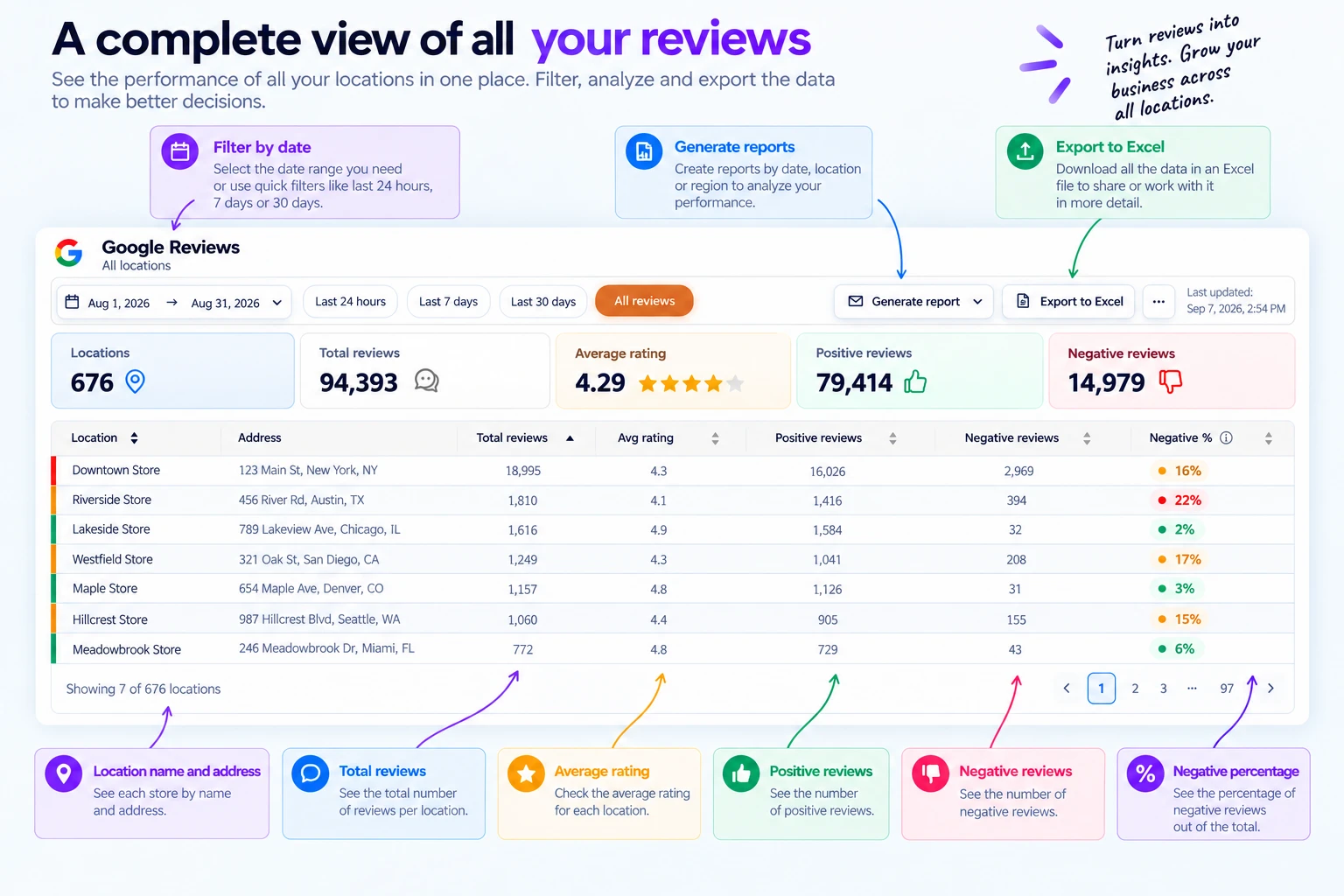
Explore the multi-location review management workflow ↗See new, unanswered, and negative Google reviews across every retail store from one dashboard.
Explore the reviews dashboard ↗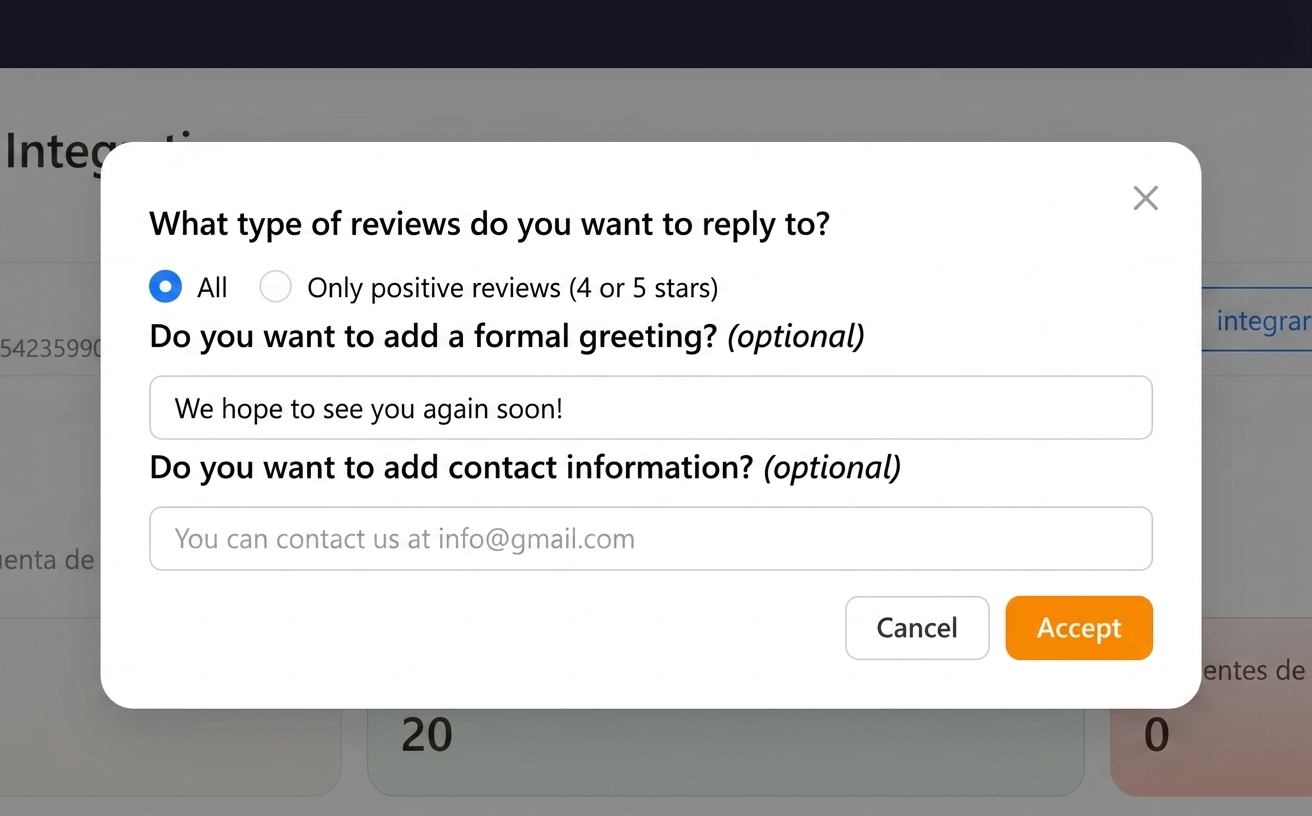
Respond individually or through configured automation with rules adapted by brand, country, region, or store.
Explore AI review responses ↗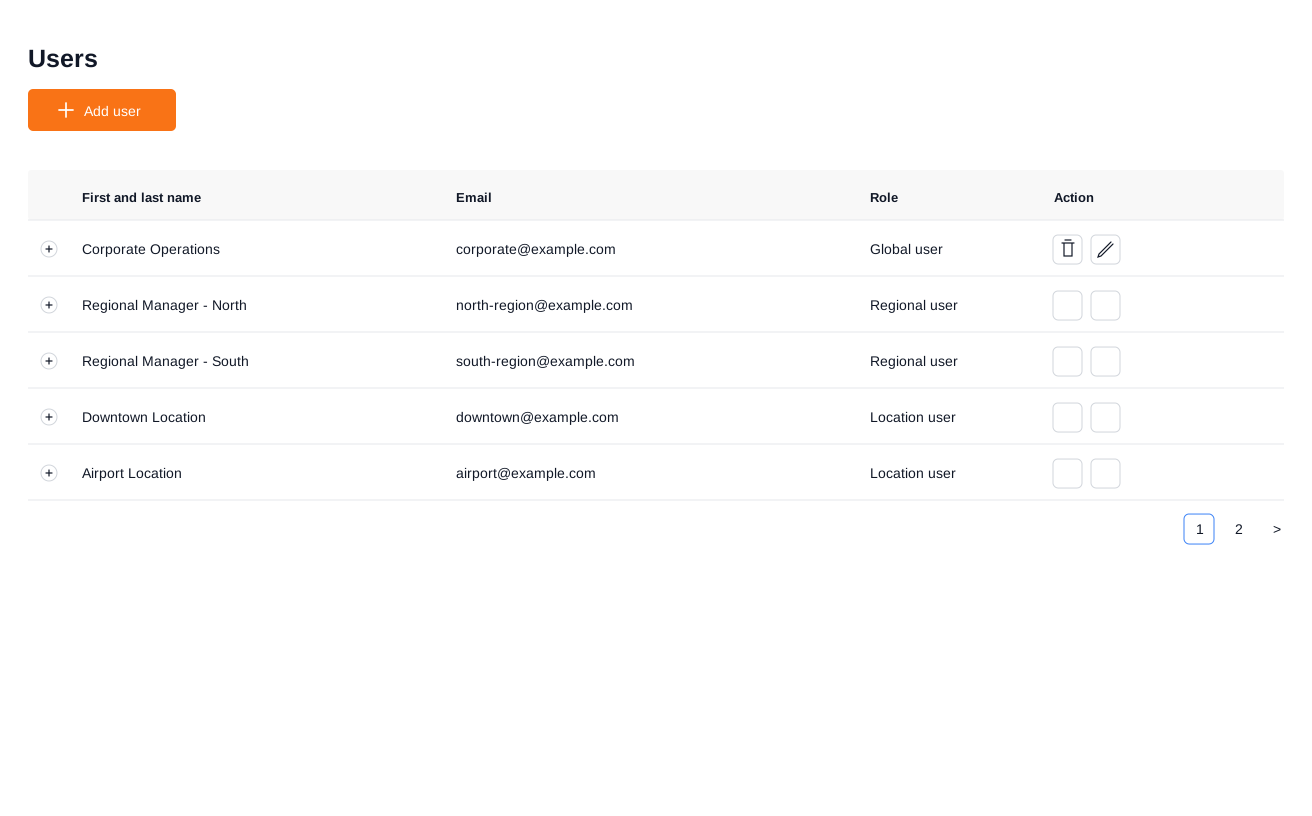
Give every user access only to the brands, territories, and stores they are responsible for.
Explore role-based access ↗Route customers to the correct Google profile through QR codes, WhatsApp, email, SMS, links, and geolocation.
Explore review collection ↗Notify the right team when feedback needs attention and identify stores with declining ratings.
Explore negative-review alerts ↗Compare rating, review volume, response activity, recurring topics, and trends by store, city, region, country, brand, or group.
Explore review analytics ↗Set different rules by brand, country, region, or store, and pause automation wherever local review is needed.
Publish personalized AI responses within the tone and rules defined by the retail brand.
Let AI prepare the response while corporate, regional, or store users approve it.
Keep sensitive stores or situations under complete human control.
Identify incomplete profiles, missing data, inconsistent information, and locations that need attention.
Explore profile management ↗Update hours, categories, attributes, photos, listings, Posts, and Q&A across selected stores.
Explore profile management ↗Create or update a product once, then manually select the stores where Cacao should replicate its name, price, category, URL, and image through Google Merchant API.
Explore profile management ↗Export reporting data for regional and store managers while managing multiple brands and countries in one account.
Explore the reviews dashboard ↗Connect private survey feedback with the correct store, region, or operating group and compare recurring customer-experience issues across the network.
Explore multi-location customer feedback ↗Use review content to see why ratings change, where operational problems repeat, and which locations need attention.
Identify feedback about customer service, stock, prices, cleanliness, queues, and product availability.
Explore review analytics ↗See where each topic appears most often and compare customer experience across the network.
Explore review analytics ↗Measure whether recurring issues, sentiment, and location ratings are improving or deteriorating.
Explore the reviews dashboard ↗Turn large volumes of customer comments into clear themes for customer experience and operations teams.
Explore review analytics ↗Retail teams use Cacao to centralize Google profiles, increase response coverage, and understand performance by location.
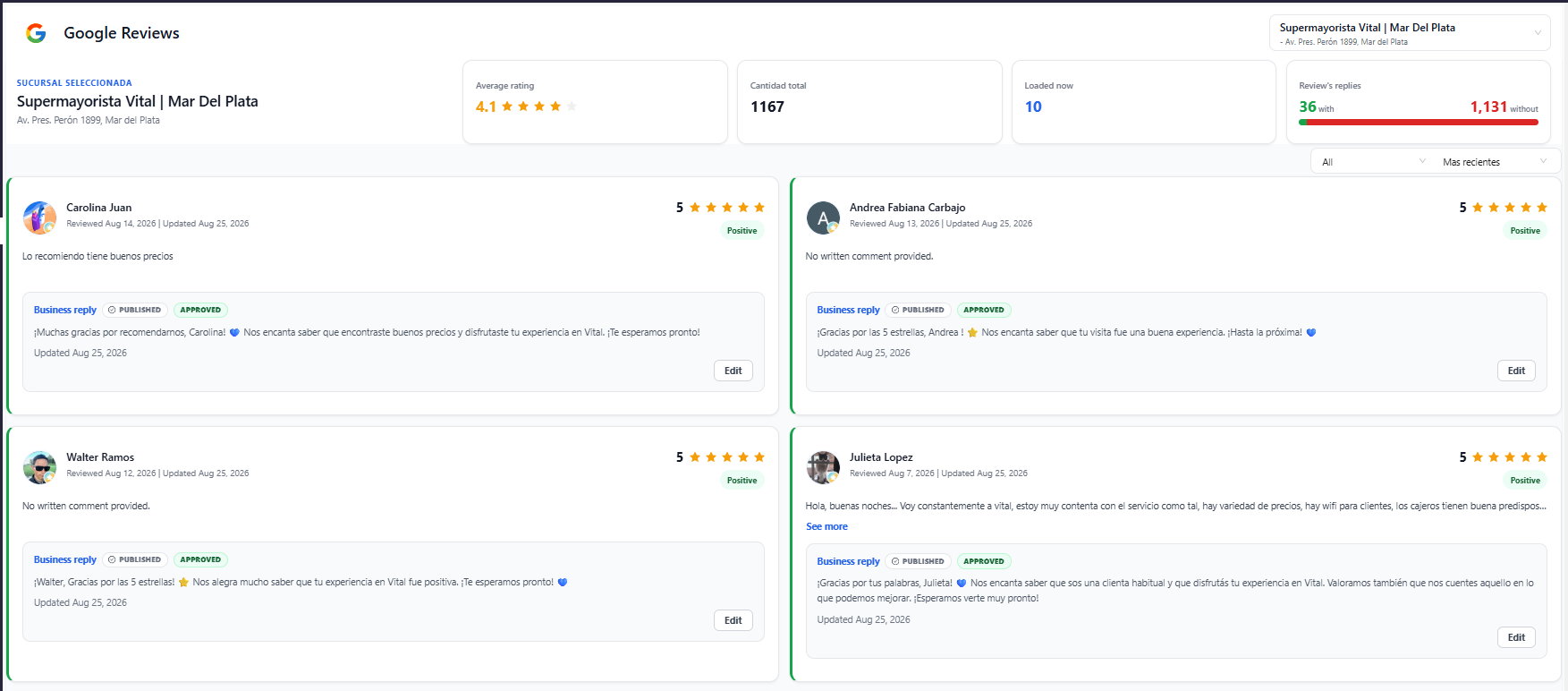
Vital Supermayorista centralized reviews and Google Business Profiles across 20 stores, using AI-generated drafts with human approval and location-specific instructions.
Explore a workflow tailored to your stores, regions, brands, review volume, Google profiles, and product catalog. Start with seven days of free access, no credit card required.
Book a Free DemoFor 100 US stores with one Google Business Profile each, Cacao provides an indicative example of USD 2,500 per month, subject to a final quote, including taxes, unlimited users, monthly billing, and no minimum commitment. WhatsApp, SMS, and email request delivery, third-party integrations, and project-specific services are quoted separately. See Cacao pricing for the included software scope and published tiers. This example applies only to the United States and does not establish rates for other store counts or markets.
Google review management for retail businesses is the process of monitoring, generating, responding to, and analyzing customer reviews across every physical store and Google Business Profile. Retail review management software centralizes profiles, responses, alerts, review generation, and location-level analytics so corporate marketing and customer experience teams can manage every location from one platform.
Retail chains manage reviews by centralizing every store and Google Business Profile in one platform, defining corporate response and escalation standards, assigning regional and store-level access, and comparing review performance by location. Corporate retains visibility and governance while the responsible local teams can act with store context.
Yes. Cacao centralizes Google reviews, profiles, access, automation, and reporting for retail networks ranging from a few stores to hundreds of locations, brands, and countries.
Yes. Corporate users can see the complete retail network, regional managers can access assigned territories, and store managers can be limited to the locations they operate. A user can manage one store or several.
Yes. Retailers can request reviews through QR codes, direct links, WhatsApp, email, SMS, and geolocation, routing each customer to the correct store Google Business Profile.
Yes. Cacao helps retail teams identify missing profile data and manage supported fields such as hours, categories, attributes, photos, listings, Posts, and Q&A across selected stores.
Yes. Through Google Merchant API, a user can create or update a product with its name, price, category, URL, and image, then manually choose the stores where Cacao should replicate the changes. Products can also be deactivated or removed across selected stores.
Yes. Cacao uses AI to identify and summarize recurring themes such as service, stock, pricing, cleanliness, queues, and product availability. Teams can compare these topics by store or region and follow trends over time.
 El Balcon
 Grupo Popular